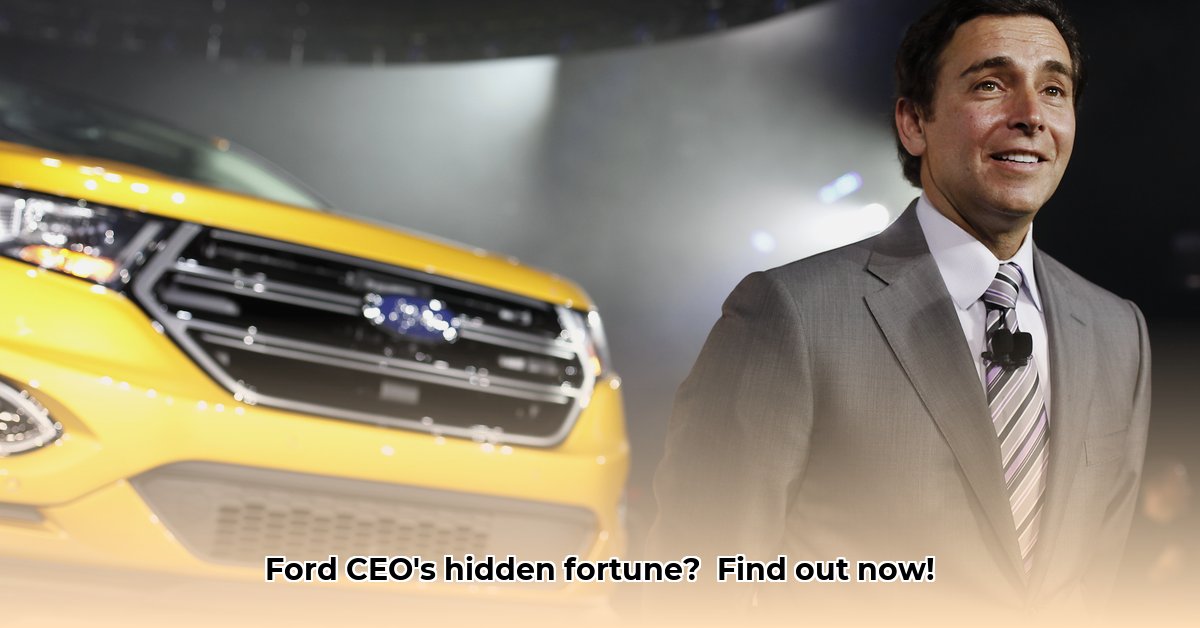
Ford CEO Net Worth: A Legacy Forged in Steel and Innovation
The story of William Clay Ford Jr.'s net worth isn't simply a matter of dollars and cents; it's a compelling narrative of family legacy, bold strategic decisions, and navigating the turbulent landscape of the global automotive industry. He didn't merely inherit a name; he inherited the leadership of Ford Motor Company, a responsibility that profoundly shaped both his career and personal wealth.
The Weight of History: A Family Legacy at Ford
Imagine the weight of expectation: your family name synonymous with a global automotive empire. This was William Clay Ford Jr.'s reality. His grandfather, Henry Ford, revolutionized transportation, forging an indelible link between the Ford family and the company's success. This legacy presented immense opportunities but also immense pressure. He had to not only maintain the family's reputation but also guide the company through periods of unprecedented change and intense competition. This inherent pressure undeniably influenced his decisions and, consequently, his net worth. The expectation to succeed transcended personal gain; it was about upholding a multi-generational family legacy.
The Way Forward: A Gamble on Ford's Future
Ford Jr.'s tenure as CEO was defined by the "Way Forward" restructuring plan – a massive overhaul of the company's operations. This wasn't simply cost-cutting; it was a complete restructuring of a colossal machine while it was still running. It involved streamlining operations, workforce reductions (a difficult but necessary step), and a fundamental shift in the company's internal structure. While some praised his decisiveness, others criticized the severity of the cuts. The short-term pain – job losses and operational disruption – was palpable. The long-term benefits, however, remain a subject of ongoing debate. Did this radical surgery save the company, or did it leave lasting scars? The success (or failure) of "Way Forward" directly influenced Ford's financial health, and thus, Ford Jr.'s personal wealth.
Betting on Green: Electric Vehicles and the Future of Mobility
Another defining characteristic of Ford Jr.'s leadership was his willingness to take calculated risks on the future of automotive technology. He invested heavily in fuel-efficient vehicles, exploring alternative fuels, and championing electric vehicle development. This involved significant upfront investment with uncertain returns. At the time, the market viability of electric cars was far from guaranteed. This was a bold gamble on an uncertain future. However, this foresight is likely a significant contributor to his current net worth as the automotive industry increasingly embraces electric vehicles. The establishment of Fontinalis Partners, an investment firm focused on future mobility solutions, further reflects his forward-thinking approach. The performance of this firm undoubtedly played a role in shaping his overall financial standing.
Passing the Baton: Leadership and Succession
Interestingly, Ford Jr. stepped down from the CEO role, handing the reins over to Alan Mulally. This decision highlights the complexities of even the most powerful positions. Even within a family business, recognizing the need for specialized expertise and fresh perspectives is crucial. This decision adds another layer to the narrative of Ford Jr.'s net worth, demonstrating that his wealth wasn't solely determined by his time as CEO but also by his strategic decisions regarding the company's future.
Deconstructing the Net Worth: A Holistic Perspective
Estimating William Clay Ford Jr.'s net worth demands a nuanced understanding. It's not simply a figure on a balance sheet; it's the outcome of a complex interplay of factors. His personal wealth reflects his leadership decisions, the ever-changing automotive industry landscape, and the long-term effects of various strategic choices. Was his legacy one of daring innovation or cautious stewardship? The answer is multifaceted and depends heavily on one's perspective.
How Did William Clay Ford Jr.'s Leadership Shape Ford's Long-Term EV Strategy?
Key Takeaways:
- William Clay Ford Jr.'s lengthy tenure at Ford, shaped by family legacy and a forward-looking perspective, significantly influenced the company’s trajectory into the electric vehicle (EV) market.
- His leadership involved navigating challenging economic circumstances, making strategic decisions that impacted Ford's financial health and long-term sustainability.
- Ford Jr.'s commitment to environmental responsibility and innovation directly contributed to Ford's investments in hybrid and electric vehicle technologies.
- While the comprehensive impact of his decisions on Ford's EV strategy is still unfolding, his proactive approach to navigating industry changes created a solid foundation for the company’s present-day initiatives.
A Family Legacy and a Shifting Landscape
William Clay Ford Jr., inheriting a rich family legacy, faced extraordinary pressure. How could he maintain Ford's iconic brand while leading the company into an uncertain future? The automotive industry was undergoing rapid transformation, and he recognized that clinging to the past would not suffice.
The "Way Forward" and Beyond: Restructuring and Reinvention
Ford faced substantial challenges in the early 2000s. The "Way Forward" restructuring plan, spearheaded by Ford Jr., included drastic cost-cutting measures and a reassessment of Ford’s operations. This wasn't merely about immediate survival; it was about establishing a foundation for long-term growth in a rapidly evolving market, especially the emerging EV sector. Did these bold moves succeed? Examining Ford's current position reveals that a considerable portion of its success is undeniably linked to the foundation laid during this critical period.
Investing in the Future: EVs and Sustainable Practices
How did William Clay Ford Jr.'s leadership affect Ford's long-term EV strategy? His vision extended beyond immediate profitability. He championed investments in alternative fuels and hybrid vehicles long before they became mainstream. The Ford Escape Hybrid was a pivotal step, showcasing Ford's commitment to a greener future. This wasn't merely a public relations tactic; it represented a fundamental change in the company's technological direction, setting the stage for its current focus on electric vehicles. It was a calculated risk based on a long-term vision.
Fontinalis Partners: A Strategic Move
Ford Jr.'s involvement with Fontinalis Partners, a venture capital firm specializing in mobility investments, further solidified his commitment to innovation. This external engagement provided Ford with invaluable insights into emerging technologies and market trends, thereby giving the company a competitive edge in the electric vehicle market. This demonstrated his ability to leverage resources from beyond traditional operational boundaries.
Navigating the Challenges: Successes and Setbacks
The journey wasn't without setbacks. The transition to EVs demanded major investment and wasn't always smooth. Although Ford's current EV efforts show a strong commitment, significant challenges remain. This underscores the complexity of leading a massive corporation through a substantial technological transformation.
A Legacy of Vision and Adaptation
William Clay Ford Jr.'s leadership offers a valuable case study in navigating legacy, industry disruption, and technological transformation. He took a gamble on the future, investing significantly in sustainability, innovation, and strategic partnerships. While the complete effects of his decisions on Ford's long-term EV strategy are still unfolding, his impact on the company's trajectory is undeniable. He didn't simply preserve a legacy; he adapted it for a completely new landscape.
https://media.ford.com/content/fordmedia/fna/us/en/people/william-clay-ford--jr-.html